The Maison
A Maison
that never
left oak.
Since 1864,
a Maison true to oak
Founded in Épernay by Alfred Gratien, the Maison has held to one vision for more than 160 years: to craft champagnes where time, precision and savoir-faire come before ease.
Having first founded Gratien & Meyer in Saumur, Alfred Gratien settled in the heart of Champagne and, in 1864, created a Maison devoted entirely to great champagne, driven by one conviction: great wines are born of patience and rigour.
Departing from common practice, the Maison upholds artisanal methods that have become rare: fermentation in small oak barrels, no malolactic fermentation, and ageing far beyond what the appellation requires.
At Alfred Gratien, every champagne is first conceived as a great wine.
Four generations,
one standard
Since 1905, the Alfred Gratien style has been passed down through a single line of Cellar Masters.
From Gaston to Nicolas Jaeger, four generations have followed one another, handing on far more than a craft: a memory, a library of wines, precise gestures and an intimate understanding of time.
Before becoming Cellar Master in 2007, Nicolas Jaeger worked for seventeen years alongside his father. A patient transmission, built on observation, experience and daily tasting, that remains one of the Maison’s defining features.
In a world where styles change, Alfred Gratien maintains a rare continuity: a signature and a standard handed down from generation to generation.
Our Cellar Masters
Gaston Jaeger
1905 – 1951
Charles Jaeger
1951 – 1978
Jean-Pierre Jaeger
1978 – 2007
Nicolas Jaeger
2007 – today
It all begins in the vineyard
Before the oak and the cellars, there is the grape.
The Maison owns 1.63 hectares of vines, which it supplements with a rigorous selection of grapes from some sixty partner growers, some of whom have worked with the Maison for generations.
Only first-press juice, the purest and most delicate, is used. A standard that lays the foundations for the finesse, freshness and balance of Alfred Gratien champagnes.
Fermentation
in oak barrels
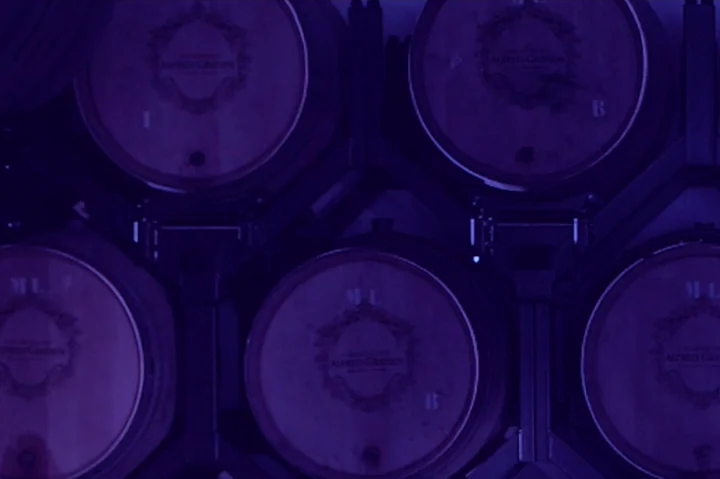
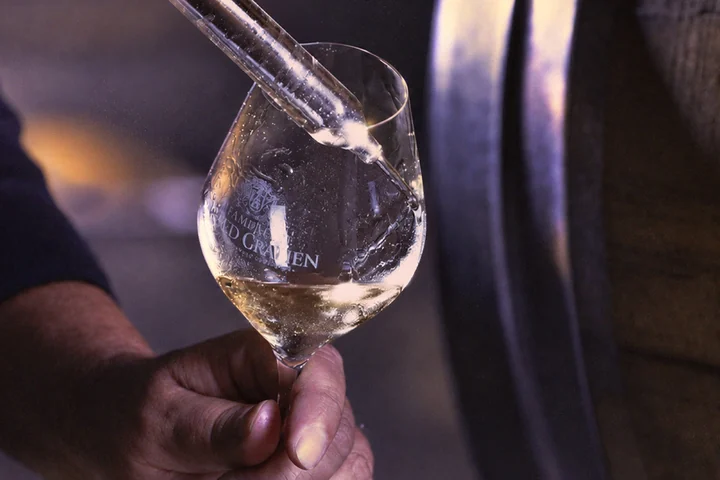
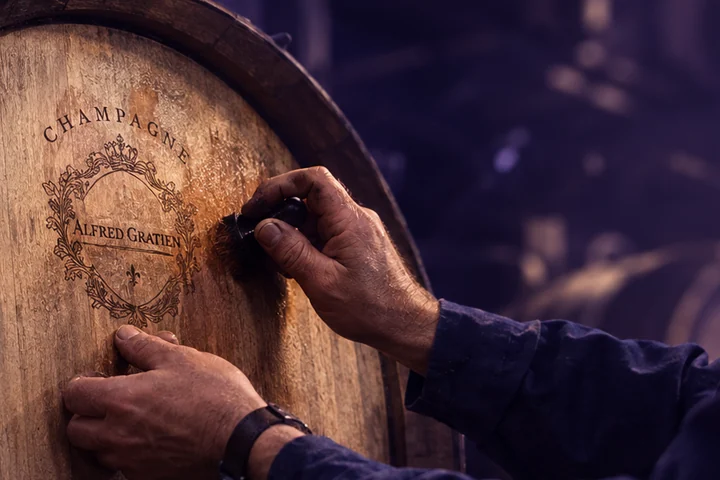
Since 1864, each cru has been fermented separately in small 228-litre oak barrels.
Nearly 1,000 barrels, each carefully selected by Nicolas Jaeger, Cellar Master, fill our cellars to bring out the full potential of each wine.
The oak supports the wine without ever overpowering it. Through natural micro-oxygenation, it brings texture, depth and complexity while preserving the expression of the fruit and the terroir.
Now rare in Champagne, fermentation in oak is one of the Maison’s signatures.
And in the silence of the cellar, a tiny part of the wine evaporates through the oak: the angels’ share.
Preserving natural freshness
Alfred Gratien has always chosen to forgo malolactic fermentation.
This method preserves the grape’s natural freshness, its tension and its ageing potential.
Combined with the roundness brought by ageing in oak, it produces champagnes in which freshness and depth find a rare balance.
The art of blending
Once each wine has revealed its character, the time comes to blend.
Between precision and intuition, the Cellar Master composes the harmony that keeps each cuvée true to the Alfred Gratien style.
Terroir, savoir-faire and time come together in precise, deep, gastronomic champagnes, made to last.
Time as craftsman
After blending, the wines continue to evolve in cellars dug into the chalk, eighteen metres underground, at a naturally constant temperature.
From the century-old wine cellar, home to nearly 1,000 barrels, to the cellars below, more than a million bottles age in natural conditions.
Non-vintage cuvées rest for nearly four years. Great vintages can rest for seven years, or even several decades for some exceptional cuvées.
The finest vintages join the Vinothèque, the Maison’s living memory.
Here, time is never mere waiting. It is the wine’s final craftsman.